


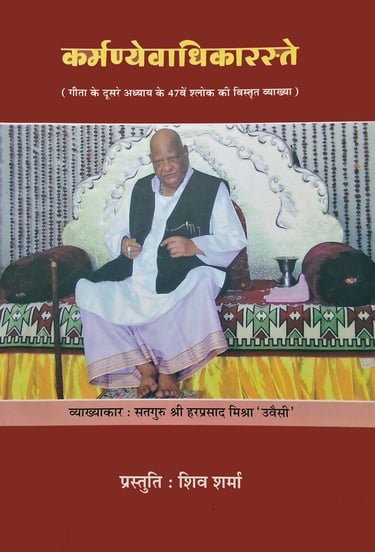
A detailed exposition of the 47th verse of the second chapter of the Gita. It explains the distinctions between Karma (prescribed action), Akarma (inaction), Vikarma (prohibited action), and Nishkama Karma (action performed without desire for the fruit). It also analyzes the concepts of Swakarma (one's own duty/action), Swadharma (one's inherent duty), and Swabhava (one's innate nature). It is explained that Nishkamata (freedom from desire) is merely a state of mind; the sense of detachment arises only after one becomes established in this state. Answers to all possible questions regarding action are provided here. Grasping this is beyond the capacity of the ordinary human being; the Gita's philosophy of action is understood only when we transcend our individual sense of ego.